When Life Gets Loud, Change Is Already Happening
These last couple of weeks have been a little crazy in our house — crazier than usual, and that’s saying something.
In September, Nic took on the role of our local Little League President. A year ago, I volunteered to be on a Building Committee in our town. Then in January, I became the “acting” president of a non-profit arm of that organization, created to advocate for and raise funds for a Community Center in our community.
In the last four weeks, I’ve been deep in the paperwork needed to officially submit our non-profit to the state and federal government. I’m also the Marketing and PR Coordinator for our Little League, which means there’s always a message to get out — evaluations, uniforms, opening day, sponsor thank-yous. And Nic has been in the middle of team formations, scheduling, field availability, and field improvements. Our phones are constantly dinging. There’s always a new email to answer and always a new one to write.
And on top of all of it, there’s been a lot of change happening within the league. New scheduling tools, processes being put into place, teams getting switched around. Change is hard for some people.
I’ve Always Been Someone Who Loves Change
My mother, for example, does not like change at all. I, on the other hand, love it. Seriously — ask my friends from growing up. Every time they came to my house, I had completely rearranged my room. Like, weekly.
Ask Nic — I get antsy when the furniture layout stays the same too long. Some days I’ll walk into a room and announce, “we need to paint.” It’s just time for a change. And when the change doesn’t happen fast enough, it starts to make me a little crazy.
I think it’s because I’m a creative person. Change signals creativity to me — something new, something different. I tend to approach problems from all angles, think about things differently. Ask my poor high school Latin teacher, who had to field my constant questions: Why is the word order that way when it could be this way? Did anyone consider other translations? Were they ever actually disproven? That’s just how my brain works. Sometimes it’s a good thing. Sometimes it’s an exhausting feeling — like, why didn’t anyone else ask the questions that seem so obvious to me?
Finding Stillness in the Chaos
In the middle of all this chaos, I started journaling. Each day has prompts for both the morning and the evening, and I’ve found it helps me see the good in days that can sometimes feel completely overwhelming. It helps me maintain a routine — and I find that incredibly grounding for both starting and ending my day.
At the top of each page there’s a quote or a challenge. Recently, this one caught my attention:
“It is not the strongest of the species that survives, nor the most intelligent, but the one most responsive to change.” — Charles Darwin
We can’t control whether change happens. It does. We may not like it. We may yearn for the way things were. But change is coming regardless of what we want. The question is whether we’ll be adaptive and responsive to it — because if we are, we’ll be better off in the long run.
The Hard Reality: AI Is Our Generation’s Blackberry Moment
I’m watching this play out right now with AI, and I’ll be honest — I have complicated feelings about it.
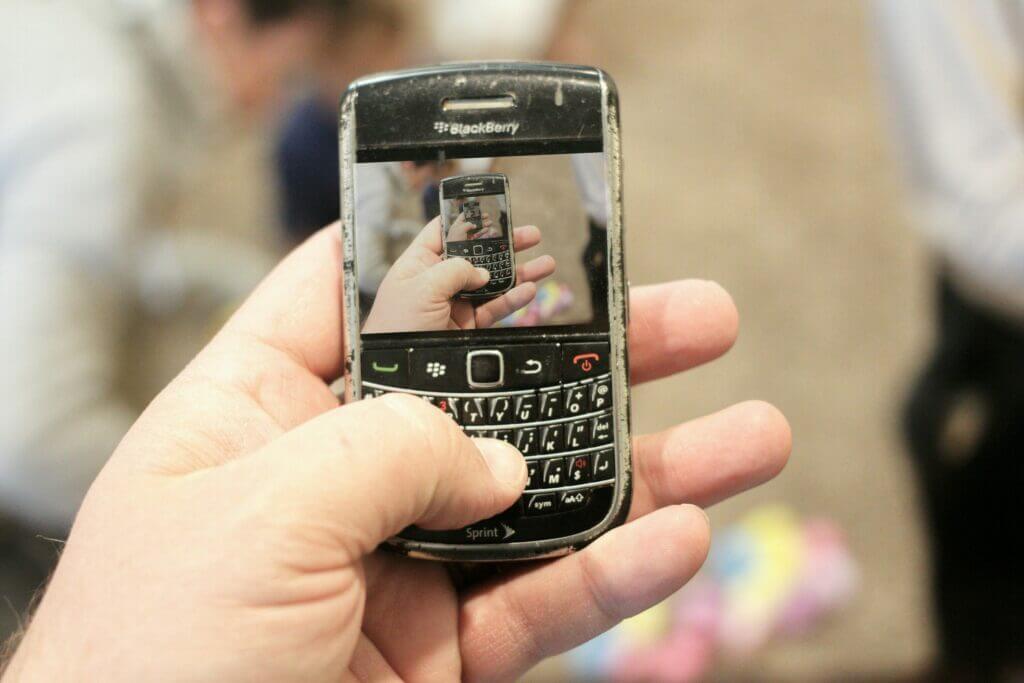
I remember being on a date with Nic when he got a Blackberry for work. I was still in college, and I turned to him and said, “Why would anyone ever want their email available to them every single minute? Don’t you just want to leave work at work?”
Spoiler: that is not how it went.
We adapted. We went from one email on our phones to multiple. From ignoring work after hours to being accessible what feels like 24/7. Do I love it? Personally, no. Sometimes I watch my kids grow up and I find myself wishing they could have the device-free childhood I had — playing outside in the neighborhood until dark, completely unreachable. But that’s not the world we live in today, and learning to accept that is part of adapting.
AI feels a lot like that Blackberry moment. It’s here. It’s not going away. And our challenge — in business and in life — is figuring out how to adapt to it in a way that works for us, rather than letting it work against us.
For some tasks, like editing, coding, and ideation, it genuinely helps. For others, it still has a long way to go. But resistance alone won’t solve anything. The most successful people won’t be those who refused to change — they’ll be the ones who figured out how to adapt thoughtfully, on their own terms.
The question isn’t whether AI will change the way we work. It already has. The question is: what kind of adapter will you be?
(And if you’re wondering what happens when everyone has access to the tools but not the training to use them well — especially in design — stay tuned. That’s exactly what we’re getting into in our next post.)